
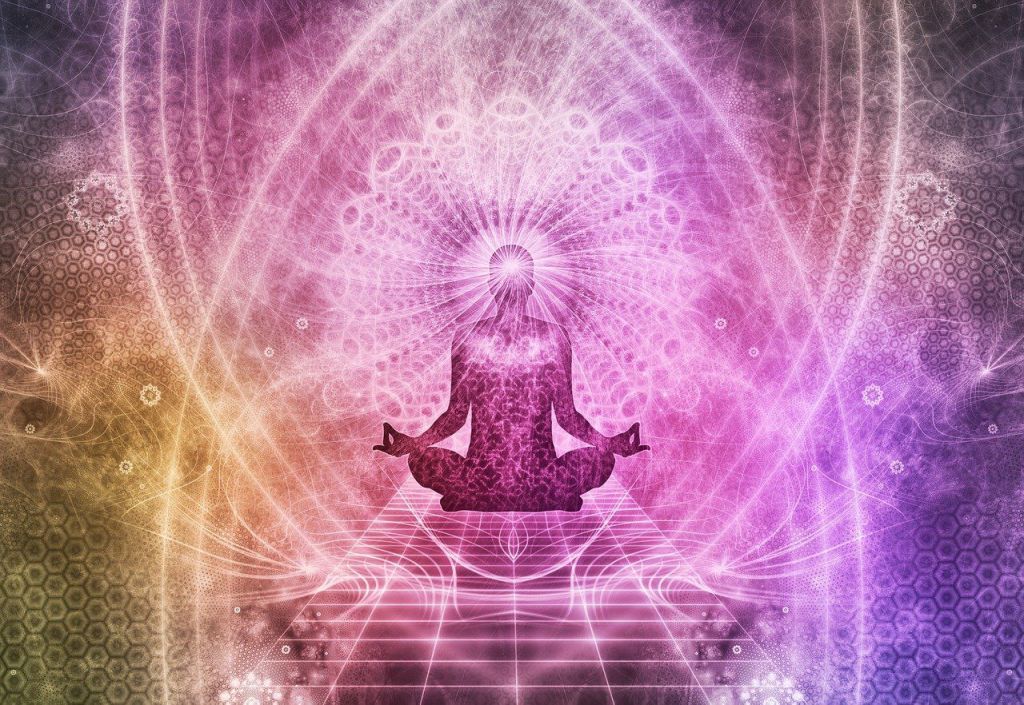
Some people might think that meditation is boring because you just sit still and do nothing, but sitting still might be challenging for some people since we have always been told to keep moving and making efforts. In meditation, effortlessness is key. Meditation is about de-concentration. Many believe it’s about emptying the mind or achieving a state of perfect relaxation, which is not true. This may also cause a person to have too many expectations. Meditation is a conscious state of rest and alertness. In this article, together, we shall explore the right way of doing meditation.
3 Golden Formula of Meditation
I WANT NOTHING
I DO NOTHING
I AM NOTHING
How To Meditate?
- No disruption
- Find a comfortable place
- Keep your pet aside
- Keep a gap of 2 to 3 hours between the meal and meditation
- Soft and gentle music can be used
- 5 to 15 minutes for starting
- Can be done in cross-legged position with the spine erect or lying down depending on the type of meditation
- Focus on your breath
- Let your mind relax and let go.
Let Go of Expectations
Do not expect anything from your practice. Trust the unknown and embrace the present moment. Do not aim for a particular feeling, and simply observe whatever arises during your meditation practice. Acknowledge your thoughts and sensations without any judgement. Just like any skill, meditation takes time and practice.
Physical Exercise can help the mind to slip into meditation
When we practice yoga postures, it has a calming effect on our brain. The body has the right amount of tiredness to slip into meditation and prepares our body for meditation. Even a short walk can make a difference. Exercise releases endorphins, which has mood boosting and stress reducing effects, making it easier to enter a meditative state.
Consider doing Breathing Exercises Prior to Meditation
Breathing exercises help to calm the mind. Practising alternate nostril breathing (Nadi-Shodhana Pranayama) can help to prepare our mind for meditation. Through breathwork, we can better control our mind and emotions. Alternate nostril breathing helps us to balance our energy channels in our body.
Sensory Pleasure
Being 100 per cent engrossed in a particular sensory object brings you to a state of meditation. It can be listening to a peaceful music, mantra, or staring at the moon, sky, or trees. Some people like to engross themselves by gazing at a candle flame or by using essential oils. The gentle flickering of the flame can promote deep relaxation and reduce stress.
Do Not Block Your Thoughts But Become the Observer of Your Mind
Welcome and embrace your thoughts whether they are positive or negative. Then, become the observer of your mind and your thoughts without passing any judgement. In doing so, awareness sets in and without you knowing your thoughts will gradually fade away or you might become aware of a few moments of deep presence.
Becoming Aware of Your Existence
You become aware of the aliveness of your cells. Ask yourself, “Who am I?”, “What am I?”, “Where am I?”. Feel your divine presence and energy in the universe. Feel your breath coming in and out of your lungs. Reconnect to your source and creation. In doing so, awareness sets in and we feel a kind of blissfullness and peace within.
Total Rest
Meditation is the art of doing nothing. Let the universe take care of you and engage in a total rest. Meditation allows the mind to become still and free from restlessness, leading to a deeper sense of rest than sleep.
“I Want Nothing. I Do Nothing. I Am Nothing.”
My conclusion
I believe that meditation leads us to an infinite path of self-discovery and continuous learning about ourselves and the universe beyond. Meditation allows us to accept ourselves the way we are and helps us embrace imperfection while maintaining balance. Meditation frees us from the past and the future. However chaotic the external world may be, we can always find peace within us. You eat for your body, you work to get a salary, you do sacrifices for your children, you go to the gym to get fitter, but what do you do for your soul?
In meditation, consistency is key. Even practising meditation for a short period of time regularly can have long-term benefits. Meditation offers a wide range of benefits, including stress reduction, improved focus and concentration, enhanced emotional regulation, higher emotional intelligence, self-awareness, and better sleep. Moreover, meditation contributes to a reduced risk of cardiovascular disease by lowering blood pressure and reducing inflammation in the body. Meditation strengthens our immune system and helps to make our body more resilient to illness.
Do you practice meditation? What are your feelings about meditation?
If you want to know more about meditation, you can join NIRVANA Yoga & Meditation Classes.
Yashna Veera, Life Coach and Yoga & Meditation Practitioner
NIRVANA
 NIRVANA
Leave a comment