
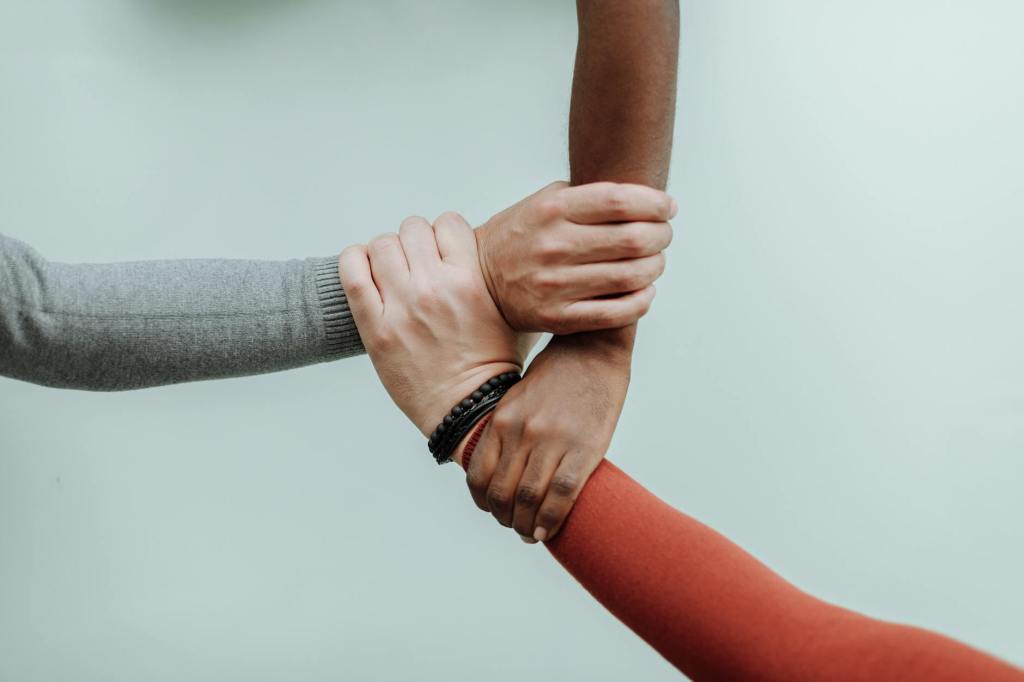
Whether you are the Prime Minister of a country, a manager, an entrepreneur, a housewife, or a student, can you rely solely on yourself? The answer is no. We need other people to thrive, grow, and serve. That is the meaning of interdependence.
Interdependence VS Independence
Interdependence is a balanced state where individuals are self-sufficient yet connected,mutually relying on each other for support, growth, and shared goals.
Independence is the ability to function alone, make our own decisions, and not rely on others for survival or well-being.
My Personal Struggles of Being Hyper-Independent
Society often glorifies independent women and drives us to believe that we must be fully independent whether emotionally, financially, and that we must be able to rely solely on ourselves. A person is seen as strong when he or she is fully independent.
Yes, being independent emotionally and financially is important but not to the extent that we hesitate to seek help when we need it. The modern independent woman has a mindset of “I don’t need anyone” which is a sign of hyper-independence. Even when I was experiencing a burn-out, I would say to myself, “I can handle it”. I would be very hard on myself and put a lot of pressure on myself.
Common signs of hyper-independence might include struggling asking for help, struggling with trusting people, difficulty in receiving help, equalising asking help with weakness, avoid showing your vulnerabilities, and feeling like you can only depend on yourself.
The modern independent woman now wants to do it all by herself – her career, her family, her duties, and her own expectations. Hyper-independence is a coping mechanism which can result from childhood experiences where relying on someone led to disappointment or lack of support. The first step is recognising our pattern and gently start healing from it.
The truth is we do not have to handle it all by ourselves and it is our human nature to seek help and support each other.
Interdependence and the Human Evolution
Millions of years of human evolution shows that humans have been able to survive through our ability to connect, communicate, and collaborate with each other. Covid 19 is an example where countries had to collaborate together to make and distribute vaccines, resources, relying on each other for support and survival.
Social connection is a basic human need such as food, water, and shelter. Human beings are wired for connection, relying on each other for resources, protection, and safety. Neuroscience tells us that when we feel connected, our brains release oxytocin, the feel-good hormone associated with trust and bonding.
Hence, biologically our species is not meant to live in isolation. Understanding how we function biologically makes it easier to understand why social connectedness matters and seeking help feels natural and not against our nature.
How do We Cultivate Interdependence?
- Adopt a learning mindset
By acknowledging that we don’t know everything, we open doors and create space to learn and receive from other people. In doing so, we become open to different perspectives which broaden our own insights and views.
- Collaborate with people having shared values and goals
Collaborate together on projects, business opportunities which lead to growth, personal development, and a greater purpose.
- Self-awareness
By becoming self-aware, we become aware of what we are feeling. Instead of saying “I can handle it” in overwhelming situations, we can say, “What if there was a support available?”
- Be open to receive support
When we acknowledge what we feel, it becomes easier to take action, whether it is seeking support from a trusted friend, colleague, life coach, or psychologist. In doing so, we also become open to receiving support which feels natural.
- Rely on trustworthy people
By learning to rely on trustworthy people, for instance, if you are leading a team, it becomes easier to trust and delegate tasks hence preventing burn-out. Moreover, it encourages accountability and gives your team the space for growth instead of micromanaging.
My Conclusion
I believe that we are living in the age of interdependence and it has become even more fundamental. With the rise in technology, artificial intelligence, and social media, it is important to realise that at the end of the day we are a species with a need for connection, safety, and protection. By embracing interdependence with each other, we are not losing our identity but we are enhancing our growth and personal development.
Maybe we can ask ourselves when was the last time that we told ourselves “I can handle it by myself” and what difference would it make if we shifted our mindset to “What if I let someone support me?” I believe that it’s time to view interdependence as a strength instead of a weakness. In doing so, we will allow ourselves to flow with our natural instinct and human behaviour.
How are you embracing interdependence in your life?
Yashna Veera, Life Coach and Yoga & Meditation Practitioner
 NIRVANA
Leave a comment