
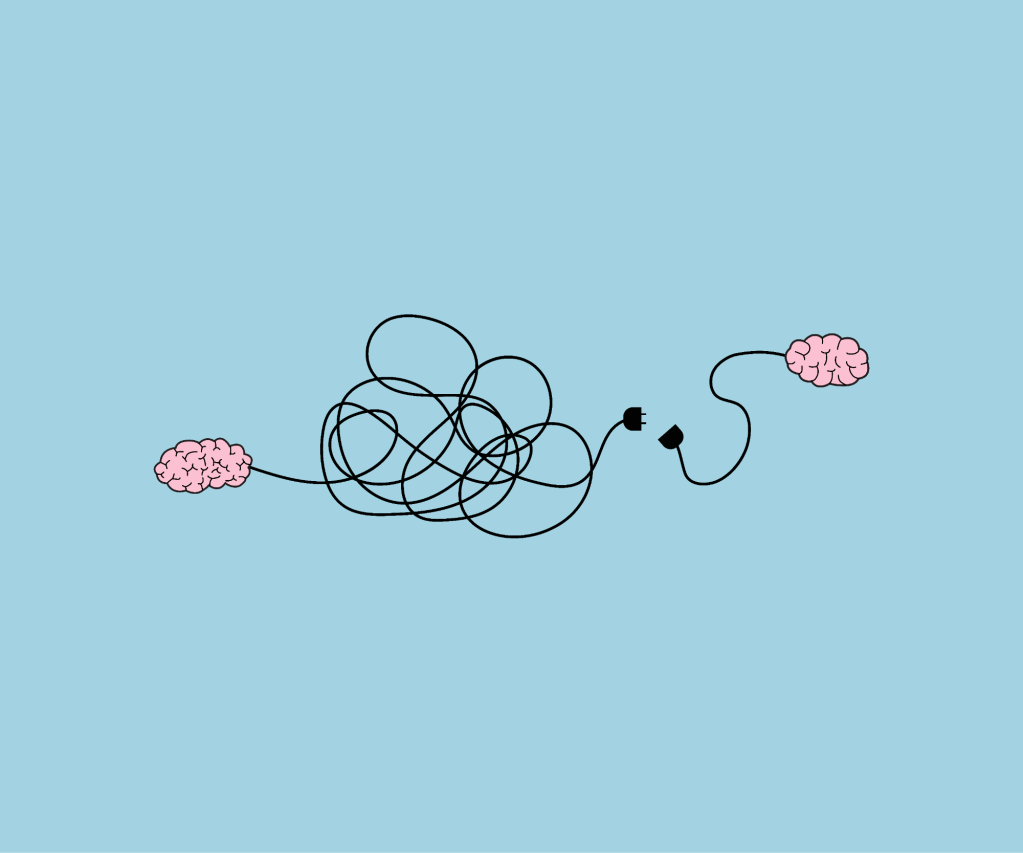
Overthinking drives us in a loop of thoughts by replaying past events or conversations, assuming the worst-case scenario, or being stuck about what to do next. Overthinking can cause anxiety and disruptions in our sleep pattern.
The root cause of overthinking may come from a need or desire to remain in control, perfectionism or fear. It is our brain’s way of trying to protect ourselves.
As an overthinker, I have written this article for myself and every person who may be struggling with overthinking.
Self-Awareness
I believe that awareness is key to make us become aware our thoughts. We can try to name the feeling for instance “I am overthinking”. This allows us to observe our thoughts without judgment.
Ask yourself: “What am I feeling right now?”
Walk for atleast 30 minutes
Being an overthinker, I sometimes have difficulty to break the loop of thoughts so I go for a walk. The first few minutes when I start to walk, I am still overthinking. However, I don’t block the thoughts and I just keep on walking. After around 30 minutes, my thoughts do not stop but I feel lighter. Sometimes, I find a certain clarity in my thoughts. It is like my thoughts are more organised and not going all over the place.
Walking helps to break the cycle of overthinking by redirecting the mental energy, forcing awareness in the present moment, releasing endorphins, and by increasing blood flow to the brain enhancing mental clarity.
Another way would be to change your environment. Remove yourself from the environment where you find yourself overthinking.
Reframing of Negative Thought Patterns
Catastrophising
This happens when we are expecting the worst-case scenario which I sometimes do myself. What we can ask ourselves is “Are we 100% sure that this will happen?” or, “What evidence do I have that this is going to happen?”. We can also try to explore alternatives. “What if everything goes out well?”
Ignoring the positives
This is when we ignore the positives and focus only on the negatives. For instance, you did a presentation and you are focusing only on the mistakes that you did or you focus on the criticism and not the compliments. Try to ask yourself “What positives came out of this situation?”
Personalisation
This is when we tend to blame ourselves for things outside our control. For instance if your child didn’t do well in a particular subject, you might blame yourself and assume that it happened because of you. Another example is you assume a person did or said something because he or she does not care about you. Try to look at the bigger picture and ask yourself if these assumptions are justified.
All or Nothing Thinking
All or nothing thinking or black and white thinking happens where situations are viewed in extreme. For instance, you see yourself as a failure if you have done only one day out of five days of exercise. Instead you can say “I did what I could this week and I will do better next week. I am still progressing.” The key would be to challenge these thoughts and acknowledge partial success or nuances.
Overgeneralisation
This is when a person takes a single event and assumes that it will happen again. An example is someone who says “I failed my exam, I will never succeed in exams”. Instead the person can say “I failed but I learned from my mistakes and will make it the next time”.
Take Small Actionable Steps
Try to ask yourself “What is the smallest step I can take now?”
By taking action, you are breaking the loop of overthinking where the mind can focus on what really matters. In doing so, you are bringing clarity to your mind.
You can try setting up SMART Goals- Smart Measurable, Achievable, Realistic, and Time-Bound Goals. This technique redirects your mind in the present moment instead of thinking about what happened or what could happen in the future.
Mindfulness Techniques
Breathwork & Meditation
Breathing exercises and meditation can greatly help to stay grounded and come back to the present moment. Breathwork shifts our mind from sympathetic mode or “fight or flight” to para-sympathetic mode “rest and digest”. Meditation promotes clarity to the mind by strenghening our prefrontal cortex enhancing decision making, focus, and rational thinking.
Practice Gratitude
Gratitude helps us to focus on the good or positive things in our life. Hence, gratitude breaks the loop of overthinking and negative thoughts by calming the amygdala – our threat and fear detection. Gratitude is also known to rewire our brain and reduces anxiety and stress. Moreover, gratitude increases activity in our prefrontal cortex and improves our decision-making process.
Journaling
Journaling is a way to brain dump our worries or uncertainties on a paper. In doing so, we are releasing all our emotions instead of suppressing them. Thus, making space to bring clarity and focus to our mind.
Seek Help
Lastly, do not hesitate to seek help. A life coach can help you get to the source of your overthinking patterns and overcome them by providing you with personalised practical frameworks. A therapist can help you if you find yourself struggling with serious mental health challenges.
Wanting to seek help is the evidence that you want to get better and that you value and care for yourself.
My Final Reflection
Many of us struggle with overthinking but we can train our brain through self-awareness and reframing of negative thoughts.
By adopting mindfulness techniques such as meditation, breathwork, and journaling, we can overcome our patterns of overthinking.
Furthermore, by taking small actionable steps or SMART Goals, we can rise above overthinking and reach our goals.
If you are an overthinker, which technique works best for you?
Yashna Veera
Life Coach and Yoga & Meditation Practitioner


Leave a comment